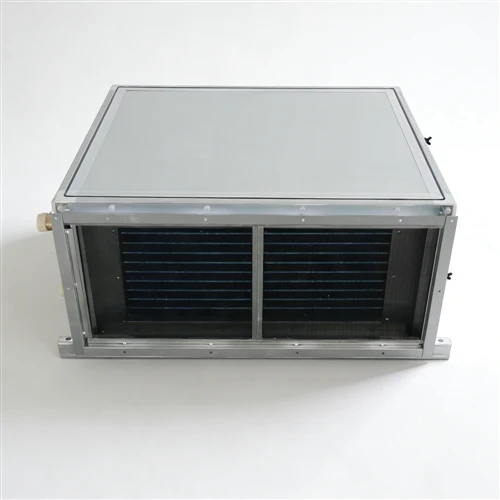
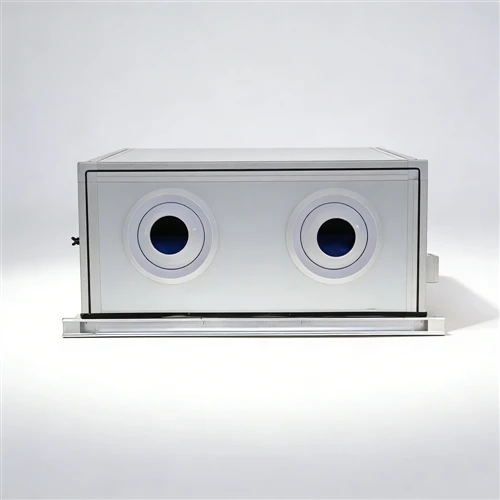
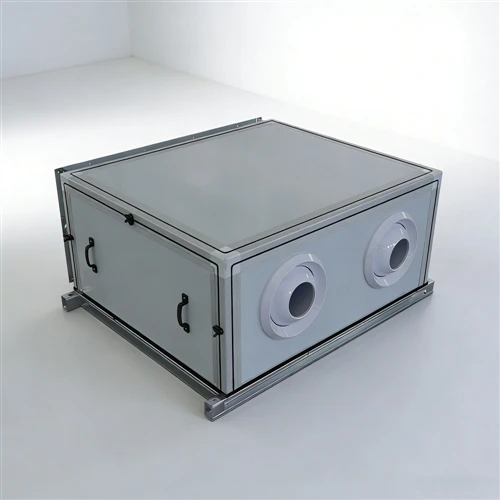
Seasonal startup and shutdown represent high-risk periods for faults on the Ceiling Cassette Air Conditioning Unit. After long-term shutdown or seasonal working condition shifts, equipment easily accumulates dust and moisture and suffers component jamming. Standardized seasonal operation avoids startup failures, odors, water leakage and insufficient cooling or heating performance. The guidance covers two scenarios: seasonal startup and seasonal shutdown.
Preparations for seasonal startup between summer and winter: after idle operation in spring or autumn, the unit accumulates substantial dust and moisture above ceilings, which readily fosters mold. First, disconnect power, detach and clean air filters, wipe supply and return grilles, open access panels and clear surface dust on evaporators to avoid blowing dust and mold indoors upon startup and degrading indoor air quality. Secondly, focus on drainage system inspection. Long idle periods may lead to scaling, blockage and adhesion inside drain pipes. Unclog condensate pipelines and verify drain pan patency in advance to prevent ceiling water seepage caused by trapped condensate during cooling operation. In addition, check for peeling, damage and scaling of insulation layers and pipelines, and confirm normal functionality of wiring and control panels.
Do not switch directly to powerful cooling or heating mode on the first seasonal startup. Run low-speed fan-only mode for 10–15 minutes first to rotate fans gently and disperse trapped stale air, moisture and floating dust inside ducts to complete internal ventilation. After ventilation finishes, switch to cooling or heating mode according to ambient temperature. Do not set extreme temperatures initially; adjust setpoints gradually to let compressors and fans adapt to working conditions and avoid overload damage and error shutdown triggered by instantaneous full-load operation.
During summer cooling operation in humid seasons such as plum rains, activate dehumidification mode appropriately to reduce condensation and dripping on the unit. Check drainage patency regularly to prevent standing water blockage. During winter heating startup, delayed warm air discharge after power-on constitutes normal anti-cold-air protection. Do not adjust settings repeatedly, which may damage temperature control systems. Avoid frequent startup and shutdown in low winter temperatures to sustain stable heating and prevent repeated compressor cycling losses.
Correct shutdown procedures for seasonal transition between summer-autumn and winter-spring: do not cut off power directly after stopping cooling or heating. Switch to fan-only mode and run continuously for 15–20 minutes to fully evaporate residual moisture inside evaporators, air ducts and drainage pipelines. This effectively prevents internal damp mold growth, bacterial reproduction and pipeline freeze blockage. After the unit fully dries and cools down, turn off the unit switch and main power supply to avoid standby power loss and circuit aging. Finally, wipe dust on air grilles and the unit body, and cover air outlets for dust protection to reduce dust accumulation during off-seasons.
In addition, inspect operating noise, airflow uniformity, water leakage and temperature control performance during seasonal operation. Arrange maintenance promptly upon detecting abnormal noise, uneven air supply, water seepage or temperature control failure. Seasonal transition offers optimal opportunities for equipment inspection and maintenance. Proper pre-season inspection and cleaning guarantee stable operation in the coming season and extend the overall service life of the Ceiling Cassette Air Conditioning Unit.
 English
- English
- Français
- Deutsch
- 日本語
- Italiano
- Español
- Português
- русский
- Svenska
- bosanski
- ไทย
- עברית
- Ελληνικά
- România limbi
- Lietuvių
- suomi
- Indonesia
- Bai Miaowen
- Srbija jezik (latinica)
- Latviešu
- Gaeilgenah Éireann
- فارسی
- Polski
- slovenčina
- हिंदी
- Nederlands
- Türkçe
- magyar
- Български
- Việt Nam
- اردو
- slovenščina
- عربي
- Melayu
- Malti
- Norsk
- বাংলা
- Kreyòl Ayisyen
- українська
- íslenska
- dansk
- Cymraeg
- hrvatski
- 한국어
- Eesti
- Čeština
- Català
- O'zbek



Send Inquiry