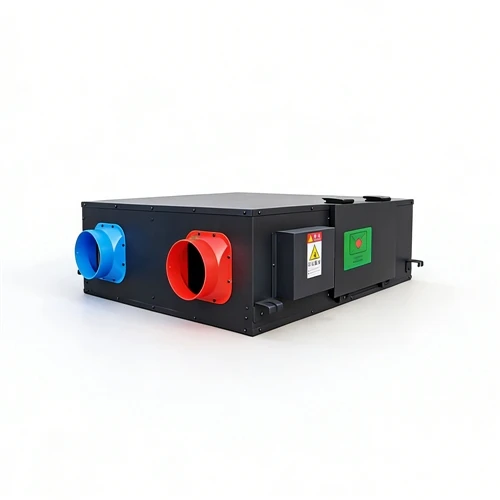
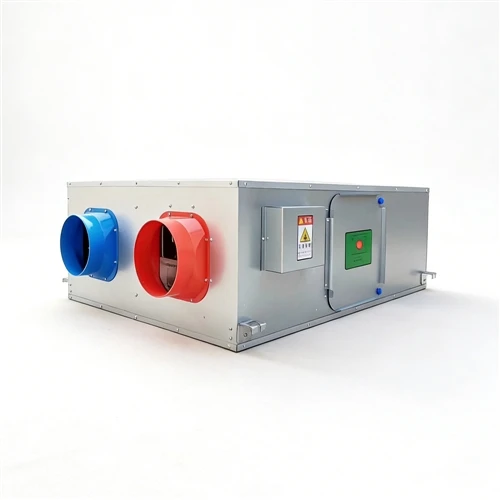
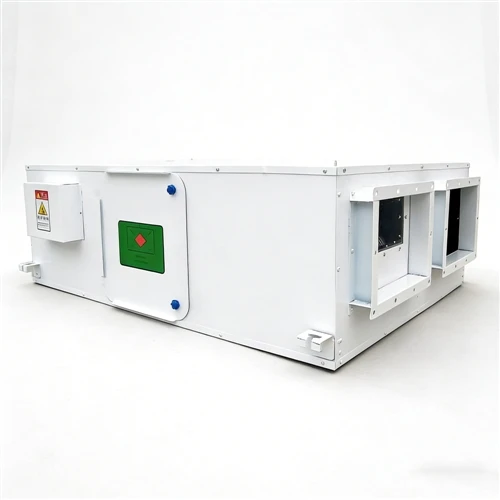
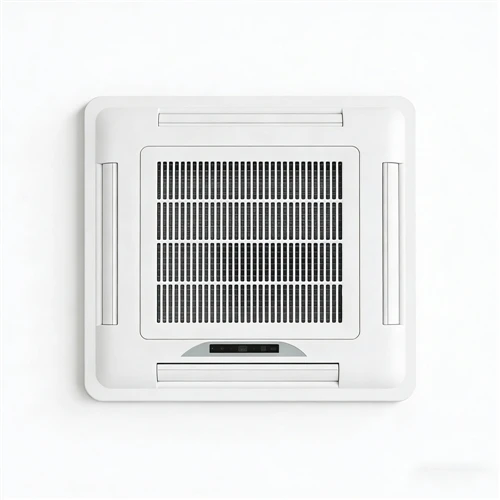
The Vertical Concealed Fan Coil Unit serves as a core terminal device for central air‑conditioning systems. It functions mainly through forced convection heat exchange supported by a water circulation loop to regulate indoor temperature. Featuring stable performance and relatively low energy consumption, it is widely applied in residences, hotels, offices and many other indoor scenarios. Its overall operation consists of four interlinked modules: water circulation, air circulation, heat exchange and condensate drainage, which jointly deliver constant‑temperature control.
In the water‑circulation phase, the unit connects to the central air‑conditioning main unit. According to seasonal demands, the main unit generates low‑temperature chilled water or high‑temperature hot water, which is transported through sealed pipelines to the concealed vertical coil assembly. The coil adopts high‑precision metal copper tubes with outstanding thermal conductivity. Water circulates inside the closed coil without making direct contact with indoor air. Acting merely as a heat‑transfer medium, it continuously carries cold or thermal energy to lay the foundation for heat exchange.
Next comes air‑circulation activation. The built‑in low‑noise centrifugal fan runs at a steady speed to draw in ambient indoor air and push it through dense aluminium fins on the coil surface. The fin structure greatly expands the contact area between air and the coil and substantially improves heat‑exchange efficiency, avoiding the drawbacks of slow temperature adjustment associated with natural convection. The air circulation forms an indoor closed loop. It only conditions existing indoor air instead of exchanging large volumes of outdoor air, delivering notable energy‑saving benefits.
Heat exchange takes place subsequently. In summer, chilled water flows inside the coil. The temperature difference between cold coil surfaces and indoor air absorbs heat from ambient air and rapidly lowers air temperature. Cooled air is blown out through air outlets to realize space cooling. In winter, hot water passes through the coil and transfers thermal energy to incoming air, and heated warm air is supplied into the room for heating. With continuous circulation and heat exchange, indoor temperature gradually stabilizes at the target setpoint.
Condensate drainage constitutes the auxiliary final step. During summer cooling, low‑temperature coil surfaces condense water vapour contained in indoor air into liquid condensate. Fitted with a dedicated drain pan and silent drainage piping at the bottom, the unit collects and discharges condensate in a timely manner. This prevents accumulated water from causing mould growth, equipment corrosion or water leakage that damages interior finishes. The whole workflow runs automatically. Fan speed can be adjusted to satisfy different temperature‑control requirements. Thanks to concealed installation, the unit generates low operating noise and imposes no adverse impact on indoor surroundings, making it a mainstream device for refined indoor temperature regulation.
 English
- English
- Français
- Deutsch
- 日本語
- Italiano
- Español
- Português
- русский
- Svenska
- bosanski
- ไทย
- עברית
- Ελληνικά
- România limbi
- Lietuvių
- suomi
- Indonesia
- Bai Miaowen
- Srbija jezik (latinica)
- Latviešu
- Gaeilgenah Éireann
- فارسی
- Polski
- slovenčina
- हिंदी
- Nederlands
- Türkçe
- magyar
- Български
- Việt Nam
- اردو
- slovenščina
- عربي
- Melayu
- Malti
- Norsk
- বাংলা
- Kreyòl Ayisyen
- українська
- íslenska
- dansk
- Cymraeg
- hrvatski
- 한국어
- Eesti
- Čeština
- Català
- O'zbek



Send Inquiry