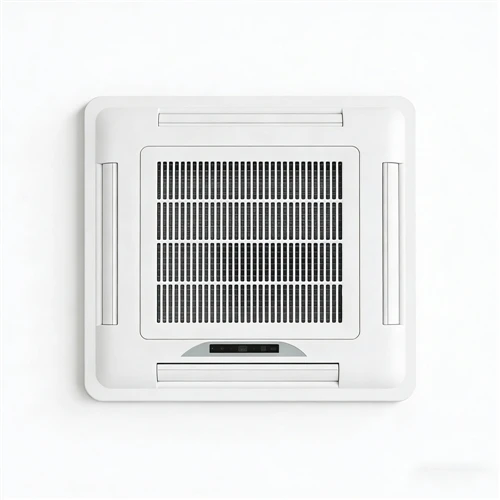
Poor performance in a Cassette Fan Coil Unit may appear as slow cooling or heating, insufficient supply air temperature, difficulty reaching the set room temperature, or a noticeable reduction in airflow. These problems can arise from the equipment itself, the air conditioning water system, the indoor environment, or inadequate maintenance. Identifying the cause requires an assessment of the unit's operating condition and the surrounding environment rather than relying on a single symptom.
A dirty air filter is one of the most common causes. During prolonged operation, dust gradually accumulates on the filter. If excessive dust builds up, airflow through the filter may become restricted, reducing the amount of air entering the unit. Insufficient airflow can interfere with heat exchange and slow the process of adjusting the indoor temperature. In this situation, users should inspect and clean the filter according to the manufacturer's instructions and ensure that the air inlet and outlets are not blocked.
Fan problems can also reduce performance. The fan moves air across the heat exchanger, so abnormal fan speed, heavy dust accumulation on the fan wheel, or component faults may reduce the air volume and weaken indoor air circulation. If the unit produces unusual noise or vibration, or if airflow suddenly decreases, the fan should be inspected. Problems involving the motor, electrical wiring, or internal moving components should be handled by qualified professionals.
The supply of hot or chilled water also affects heat exchange performance. A Cassette Fan Coil Unit generally transfers heat between indoor air and the water flowing through its coil. If the central air conditioning system cannot provide suitable water supply conditions, or if water flow is restricted by valve problems or other faults, the unit may not provide effective cooling or heating. Dust and dirt on the heat exchanger surface can also reduce heat transfer efficiency. These issues require an assessment of the water system and the internal condition of the unit.
Incorrect control settings may also make users think the equipment is underperforming. For example, an unsuitable temperature setting, an incorrect operating mode, or a malfunctioning control device may prevent the unit from meeting the user's expectations. Users should first confirm that the unit is set to the correct cooling or heating mode and that the temperature and fan speed settings are appropriate. If the controls appear to be functioning correctly but performance remains poor, the control components may require further inspection.
Indoor conditions also influence temperature regulation. A room with many occupants, heat-generating equipment, frequently opened doors or windows, or continuous heat entering from outside may have a higher cooling or heating load. Under these conditions, the indoor temperature may take longer to reach the desired setting. Room layout, supply air direction, and air circulation can also create uneven temperatures in different areas. Therefore, the equipment's performance should be evaluated in relation to the actual conditions and demands of the space.
Condensate drainage problems do not necessarily cause every type of cooling or heating issue directly, but they can interfere with normal operation. If the drainage passage is blocked or water accumulates in the drain pan, the problem should be addressed promptly to prevent leakage and damage to the ceiling or surrounding structures.
When a Cassette Fan Coil Unit performs poorly, users should first check the filter, airflow passages, control settings, and indoor conditions. If the problem continues, a qualified technician should inspect the fan, heat exchanger, valves, and hot or chilled water system. A systematic inspection helps identify the source of the problem and determine the appropriate corrective action.