Many household users wonder whether opening windows or running a Fresh Air Heat Exchanger delivers better performance after learning about this equipment. In fact, neither ventilation method is universally superior. Each has its own strengths and unavoidable drawbacks, and they fit completely different usage scenarios. Decisions should be made based on outdoor conditions, seasonal climate and household living status, rather than declaring one solution all‑round better.
Window ventilation is a traditional zero‑cost ventilation method. Once windows are opened, indoor and outdoor air forms direct convection. Stale indoor air can be expelled and fresh outdoor air drawn in within a short period. When the weather is pleasant, the air is clean, there is no heavy wind or dust, and the external environment stays quiet, window ventilation offers an excellent experience. It operates with simple steps and quickly dissipates various accumulated indoor odors. Nevertheless, window ventilation has prominent limitations. Opening windows fully connects indoor space with outdoors, so everything from outside enters rooms without screening. On hot summer days, outside heat surges indoors and raises room temperature, increasing the workload of air‑conditioning units. In cold winter, indoor heating escapes fast and living comfort drops sharply. On dusty, hazy or windy days, large amounts of particulate dust drift indoors and leave dirt on furniture and floors. For residences close to roads, traffic noise penetrates indoors and disturbs rest, while insects easily fly in through open windows. Moreover, during plum‑rain seasons or dew‑return periods, high outdoor humidity enters rooms through open windows and worsens indoor dampness and mold risks.
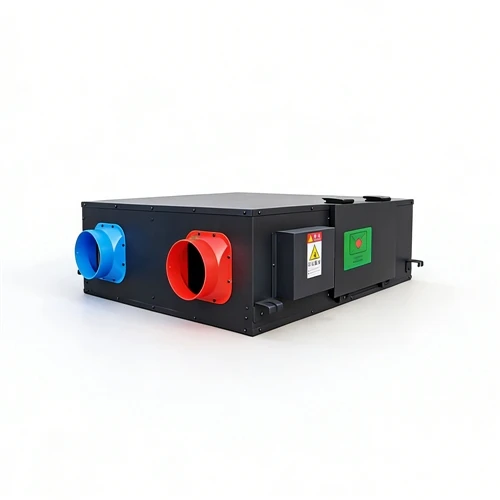
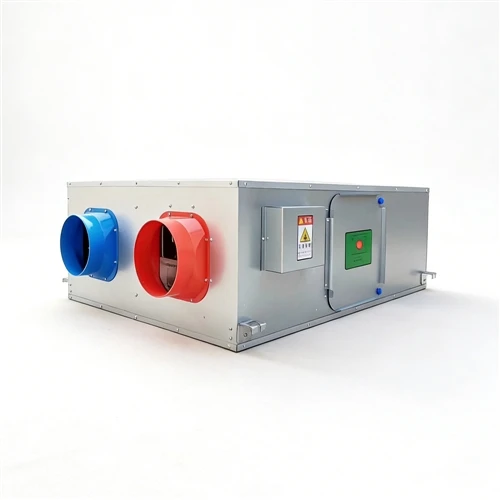
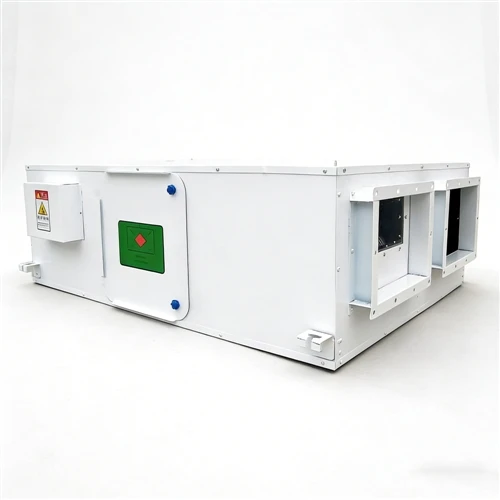
A Fresh Air Heat Exchanger completes air exchange while doors and windows remain shut, which marks its core difference from window ventilation. The equipment draws in fresh outdoor air and exhausts polluted indoor air separately. The two streams pass through the heat‑exchange core for energy transfer. Incoming fresh air pre‑absorbs temperature from exhaust indoor air to minimize temperature gaps between supplied air and the indoor environment. To put it simply, in winter, heat from exhausted warm indoor air is recovered to warm cold incoming outdoor air, preventing frigid airflow from blowing directly into living spaces. In summer, cooling energy from exhausted cool indoor air transfers to hot incoming outdoor air and avoids sharp indoor temperature rises. Throughout the ventilation cycle, closed doors and windows block road noise, insects and most outdoor dust from entering buildings.
Even so, a Fresh Air Heat Exchanger is not omnipotent. It delivers gradual continuous air renewal and cannot generate the intense instant convection created by open windows. If heavy odors are generated indoors in a short time, such as strong cooking fumes, odor dissipation speed relying solely on equipment ventilation cannot match direct window opening.
To sum up, open windows for ventilation when outdoor climate is agreeable, air is clean and quiet, and extreme temperature or humidity is absent. A Fresh Air Heat Exchanger shows its strengths under large seasonal temperature gaps, heavy outdoor dust, surrounding noise or high humidity in dew‑return seasons when window opening becomes impractical. In real‑life households, the two approaches can be combined. Open windows briefly for fast odor removal when weather permits, and maintain continuous ventilation with a Fresh Air Heat Exchanger for the rest of the time. Flexible switching according to actual surroundings better meets real residential demands.
 English
- English
- Français
- Deutsch
- 日本語
- Italiano
- Español
- Português
- русский
- Svenska
- bosanski
- ไทย
- עברית
- Ελληνικά
- România limbi
- Lietuvių
- suomi
- Indonesia
- Bai Miaowen
- Srbija jezik (latinica)
- Latviešu
- Gaeilgenah Éireann
- فارسی
- Polski
- slovenčina
- हिंदी
- Nederlands
- Türkçe
- magyar
- Български
- Việt Nam
- اردو
- slovenščina
- عربي
- Melayu
- Malti
- Norsk
- বাংলা
- Kreyòl Ayisyen
- українська
- íslenska
- dansk
- Cymraeg
- hrvatski
- 한국어
- Eesti
- Čeština
- Català
- O'zbek



Send Inquiry