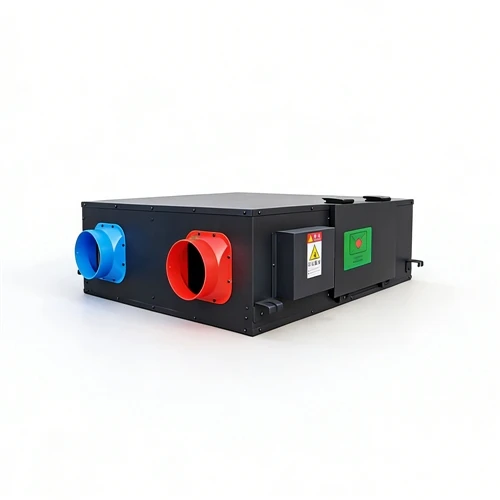
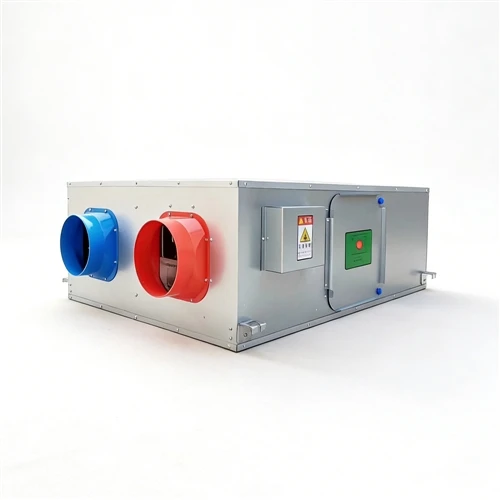
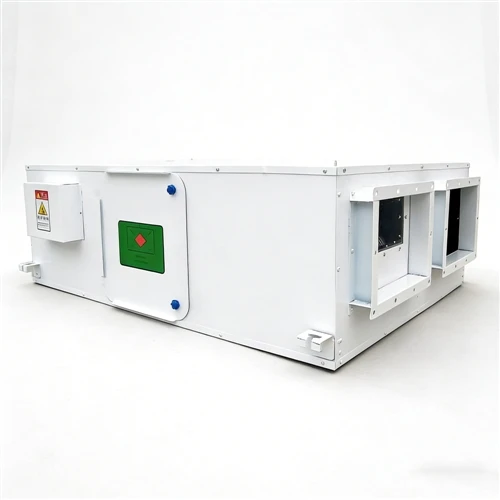
The primary purpose of a Fresh Air Exchanger is to continuously exchange indoor and outdoor air and improve indoor air circulation. When doors and windows remain closed for extended periods, indoor air can gradually become stale due to human activity, equipment operation, and other factors. Relying solely on natural ventilation through open windows may not always provide consistent air circulation, especially in locations where windows cannot be opened frequently. A Fresh Air Exchanger can help maintain continuous indoor and outdoor air exchange through mechanical ventilation.
During operation, the Fresh Air Exchanger introduces outdoor air into the indoor space while exhausting part of the indoor air to the outside. Continuous supply and exhaust reduce the amount of time that indoor air remains stagnant and help keep the air renewed. This makes the Fresh Air Exchanger particularly suitable for relatively enclosed environments, areas with prolonged occupancy, and spaces where adequate ventilation is required.
In residential environments, a Fresh Air Exchanger can be used in bedrooms, living rooms, studies, and other areas. When people stay indoors for extended periods, the air may gradually become stuffy. Proper use of a Fresh Air Exchanger can help improve indoor air circulation. In rooms where doors and windows remain closed for long periods, continuous air exchange can also reduce the discomfort associated with stagnant indoor air.

In offices, meeting rooms, schools, and training centers where many people gather, Fresh Air Exchangers can also provide practical benefits. Because these environments often have a relatively high occupancy, the demand for air exchange can be more noticeable. When people remain in an enclosed space for an extended period, the air may become stuffy and odors may accumulate. Continuously introducing outdoor air and exhausting part of the indoor air can help improve overall air circulation.
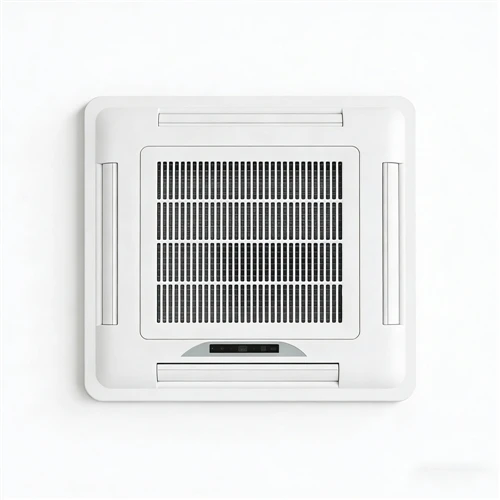
In addition, a Fresh Air Exchanger can be used together with other indoor air treatment equipment. For example, when an air conditioner is operating, the Fresh Air Exchanger primarily handles air exchange, while the air conditioner regulates indoor temperature. Since they perform different functions, their proper coordination can contribute to a more comfortable indoor environment.
Some Fresh Air Exchangers are also equipped with filtration functions that help remove certain amounts of dust and other airborne impurities from incoming outdoor air. Some models can also transfer heat during the air exchange process, helping reduce the impact of direct indoor and outdoor air exchange on indoor comfort.
Overall, a Fresh Air Exchanger is more than simply a supply air device. Its core function is to coordinate air supply and exhaust to continuously renew indoor air. It helps improve air circulation, reduce stagnant air, and provide a more stable ventilation environment. During use, the operating method should be selected according to the room environment, occupancy, and ventilation requirements. The air intake, exhaust outlet, and related air passages should also be kept clear.