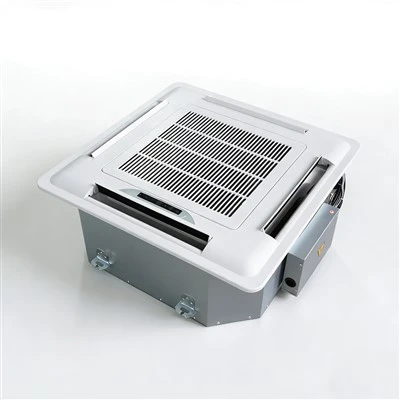
Many users wonder how often the interior of their Fresh Air Exchanger should be cleaned. They worry frequent disassembly will be troublesome, while insufficient maintenance will impair performance. In fact, frequent internal cleaning is unnecessary. Following a periodic maintenance schedule can fully meet daily applications such as homes and offices. It is important to note that filters of all grades are the primary areas prone to dirt accumulation, rather than internal air ducts, heat exchange cores, fans and other key components of the Fresh Air Exchanger. This is the core reason why frequent deep cleaning is not required.
In typical residential environments where indoor and outdoor air is relatively clean without excessive dust, pet hair or cooking pollutants, monthly disassembly and cleaning of the unit is unnecessary. Maintenance can be arranged on a quarterly or semi-annual basis. For filter care, primary filters can be removed and cleaned every three months, while high-efficiency filters cannot be washed and should be inspected and replaced roughly every six months. Even if the unit runs non-stop for a long time, the internal cleaning cycle does not need to be shortened; you only need to closely monitor filter conditions.
The maintenance schedule can be flexibly adjusted for special environments. If the property faces main roads or construction sites with heavy outdoor dust, filters will clog faster. You may inspect filters every 2–3 months and wipe off surface dust to avoid blockages. Homes with pets or frequent window ventilation contain abundant floating hair, dander and fine particles, so filters get soiled more easily. You can conduct inspections more often, yet frequent disassembly of internal chambers and air ducts remains unnecessary.
A common misconception is that internal cores and ducts require regular disassembly for cleaning. This is not the case. The internal air ducts of the Fresh Air Exchanger feature smooth surfaces to facilitate unobstructed airflow. Dust and impurities can hardly adhere and build up. Only a minimal amount of floating dust accumulates over long-term operation, which will not hinder ventilation efficiency or indoor air quality.
In addition, basic exterior maintenance guarantees stable operation. Keep the unit casing clean, and ensure supply and return air vents are not blocked by objects to maintain smooth air circulation. Carry out comprehensive routine inspections at every seasonal transition: clean filters, wipe vents and check operating conditions. This constitutes the most thorough maintenance routine. Deep cleaning of internal air ducts is only recommended when the unit has been used for years without maintenance, resulting in drastically reduced airflow and turbid outflow air. Overall, the Fresh Air Exchanger features easy maintenance. You do not need to clean its interior frequently. Consistent regular maintenance supports stable long-term operation.